
The Piano as a Keeper of Lost Voices
The Glass RoomThis flow traces the piano’s changing role as domestic instrument, public performer, wartime remnant, and link between people separated by history.
increasing Bearing strength in each event
 decreasing
Bearing strength in each eventdecreasingA Piano for the House
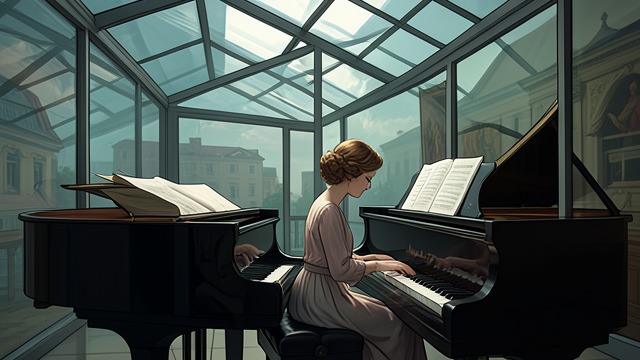
Music Enters the Architecture
A chosen instrument
The Bösendorfer piano is placed in the Glass Room as part of the family’s cultural life. Liesel practices and the home hosts musical gatherings.
Its sound gives the open room a human scale.
A domestic voice
The instrument is not just an expensive object. It carries rehearsals, performances, and the social life that makes the house feel inhabited.
The Housewarming Performances
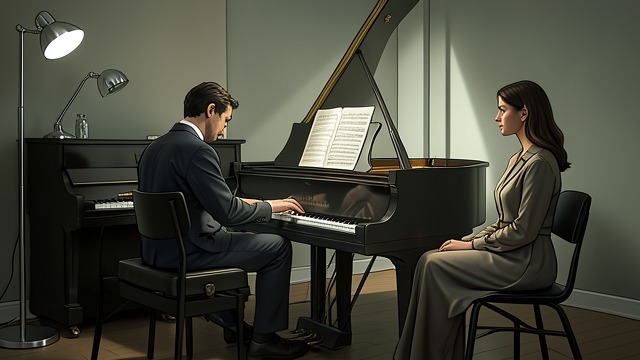
Music Establishes the Room
Public performance
Miroslav Němec plays, then gives way to Vítězslava Kaprálová. The piano becomes the focus of a room otherwise defined by glass, chrome, and open space.
The young composer’s performance suggests a future for the country’s cultural life.
Sound and place
Music fills a room whose surfaces reflect light but might otherwise seem abstract. The performance makes architecture a setting for human expression.
The Piano Survives the Seizure
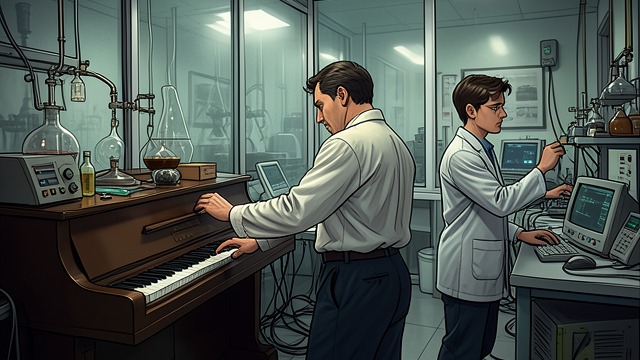
An Object Left Behind
The instrument remains
The piano is not removed when the house becomes a biometric centre. Werner Stahl has it tuned and plays it, even as the room is filled with equipment for racial research.
Its continued presence links the laboratory to the life of the former home.
Sound against purpose
The piano cannot undo the institution’s violence, but it preserves an incompatible trace of music within the space. Its survival makes the conversion feel less complete.
A Lost Duet
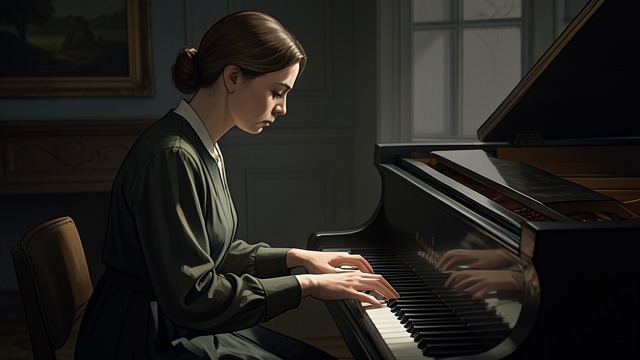
Music Recalls a Marriage
A piece with Hedda
Stahl plays music he once performed with Hedda. The absent violin part becomes a sensation of the wife he has lost.
The performance lets him speak of grief that he normally hides behind scientific language.
A confession through sound
The piano gives Hana access to the story of Erika and Hedda. It creates intimacy in the former home without absolving Stahl of his actions.
The Piano at the Museum
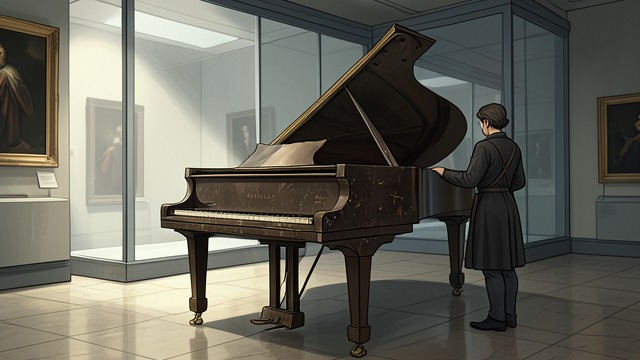
A Surviving Witness
An instrument in an empty room
The piano remains as one of the few objects that connects the room’s different uses. Visitors and former occupants encounter it as both an artifact and an instrument capable of sound.
Its presence evokes performances that are no longer recoverable.
Memory through music
The piano’s history links Liesel’s musical practice, public recitals, and Stahl’s private grief. It preserves an echo of lives that the museum cannot fully recreate.
During the design and furnishing of the home
At the opening gathering
During the Nazi centre’s occupation
During Hana and Stahl’s encounter
During the 1990 return
